
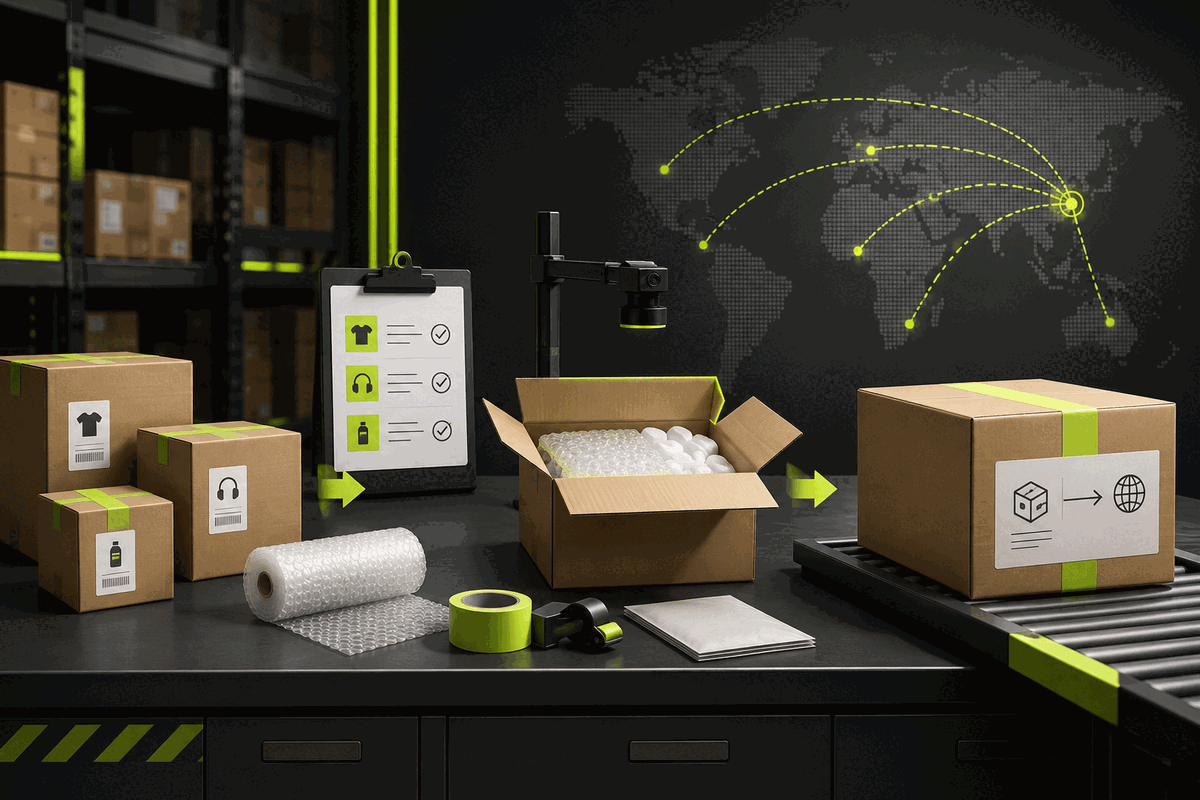
Know when forwarding is the right tool
CSSBuy's Ship For Me service is built for a specific situation: you complete the Chinese marketplace purchase yourself and direct the domestic seller to CSSBuy's Hangzhou warehouse. CSSBuy then receives the goods, can provide quality-check photographs, stores the packages, and lets you combine them for an international shipment. That differs from Buy For Me, where the agent places the marketplace order on your behalf.
Self-purchase forwarding can make sense when you already have a marketplace account, can communicate with the seller, understand the listing options, and can pay through the platform. It can also suit custom orders that require direct seller discussion. The tradeoff is responsibility. A purchasing agent normally creates the order record during checkout; with forwarding, you must create a clean connection between an outside order and the warehouse arrival.
Use a simple threshold. Choose forwarding only when you can accurately control four things: the product specification, the domestic delivery address, the tracking number, and the evidence needed if the wrong item arrives. If any one of those is uncertain, the apparent convenience of self-purchase can turn into an unidentified parcel or a weak return claim.
Build a parcel identity before checkout
The most important forwarding work happens before payment. Create one private record for every seller shipment. It should contain the marketplace order number, seller name, exact item and variant, quantity, amount paid, expected domestic carrier, and a screenshot of the confirmed order. Add a short internal nickname such as “navy jacket, medium” so you can identify the parcel without reopening several marketplace screens.
Do not assume that one marketplace order equals one domestic parcel. A seller may split an order because stock is held in different places, while several items may travel under one tracking number. Your ledger therefore needs separate fields for order number and tracking number. When a second number appears, record it immediately rather than overwriting the first.
Give the seller an executable warehouse address
Retrieve the current China warehouse address and your account-specific identification from the CSSBuy account area each time you prepare an order. Copy the address exactly into the marketplace fields. Do not reuse an address from an old screenshot or another buyer, because warehouse details and the identifier that connects a delivery to your account are operational data, not decorative text.
Chinese checkout forms may divide an address into province, city, district, street, recipient, and telephone fields. Match each element to the field CSSBuy provides. Keep the account marker in the required location even if the marketplace suggests shortening the recipient name. The goal is not merely to get the driver to the building; it is to let warehouse staff associate the package with you after the outer label is scanned.
Before paying, read the final delivery page as if you were the courier. Confirm the province and city, the complete street information, recipient, telephone number, and personal identification. Take a screenshot of that final address. If a seller later changes the carrier or rewrites the label, you still have evidence of the instruction you supplied.
A domestic parcel reaching the correct building is only half a successful handoff. The label must also carry enough account information for the warehouse to match it quickly and safely.
Create the inbound record early
CSSBuy describes the forwarding sequence as getting the warehouse address, submitting the items, receiving them, choosing a shipping method, and confirming the parcel. Treat “submit items” as a pre-alert, not an administrative task to postpone until delivery. Enter the outside order while the seller information is fresh, then add the domestic tracking number as soon as it becomes valid.
Describe the contents precisely enough for matching and inspection. “Clothes” is weak; “one black cotton sweatshirt, size large” gives the warehouse a usable expectation. Record quantity and variant, and include any reasonable handling instruction that matters at intake. Keep requests short and observable. Staff can verify a printed size or visible damage; they cannot confirm an abstract promise such as “premium quality.”
Audit warehouse intake before the return window shrinks
When the item appears in storage, compare the warehouse record with your pre-alert. Check quantity, color, size, visible model details, weight, and the photographs available. CSSBuy advertises QC checking for forwarded goods and says it can assist with returning faulty products to the seller. That help is most useful when your evidence is specific and the seller's return conditions still allow action.
Separate identity checks from condition checks. Identity asks whether this is the item ordered. Condition asks whether it arrived damaged, incomplete, or visibly defective. Start with identity because a beautifully photographed wrong variant is still wrong. Then inspect seams, surfaces, accessories, paired items, and any feature that influenced the purchase.
If the standard images cannot answer a decisive question, request a targeted view rather than asking staff to “check carefully.” State the exact location and desired evidence: the size tag beside the garment, both shoe labels in one frame, or a ruler across a specified point. Avoid using warehouse lighting alone to judge subtle color differences. A return request should cite observable mismatch, not an impression created by one compressed photograph.
Consolidate by compatibility, not by seller count
CSSBuy presents package consolidation as a way to combine separate warehouse packages into one larger international parcel. The potential saving comes from removing redundant outer packaging and paying for one compatible shipment, but “combine everything” is not automatically the best instruction.
Group items by physical and route compatibility. Soft clothing can share space efficiently. A rigid collectible, liquid, battery, powder, or unusually shaped item may change route eligibility or require protection that defeats the saving. Heavy items can crush light boxes, while fragile items need enough structure to survive handling. Build a proposed parcel and ask whether every item can travel on the same acceptable line before treating consolidation as final.
Use the 90-day free-storage period currently advertised by CSSBuy as planning capacity, not as permission to forget early arrivals. Track the warehouse date for each order. A later seller should not hold an otherwise ready parcel indefinitely, and storage time does not preserve a seller's return window. Resolve item problems first; use storage to coordinate good items second.
Choose packaging services deliberately
The official Ship For Me page lists vacuum packaging and reinforced packaging. Vacuum packing can reduce the volume of compressible clothing, which may help on routes that compare actual and volumetric weight. It is unsuitable as a universal instruction: structured garments, padded pieces, shoes, and items that crease permanently need a different decision.
Reinforcement is valuable when the contents are fragile or the outer carton needs more resistance, but protection adds material and may add size or weight. Specify what must be protected instead of selecting every option reflexively. Removing unnecessary retail boxes can reduce volume, yet the original box may be part of the product's value or the best protection for a shaped object.
CSSBuy's Buy For Me instructions also mention packaging removal, reinforcement, and insurance as optional services available around parcel submission. Availability and cost can change, so review the choices shown for the actual parcel. Make one item-level packaging plan before submission: keep box, remove box, compress, waterproof, reinforce, or separate. That prevents contradictory notes at the parcel level.
Submit international shipping with verified parcel data
After consolidation, compare the eligible shipping methods shown for the destination and contents. CSSBuy states that some items are restricted on certain methods and that the displayed choices account for available recommendations. Eliminate ineligible lines first. Then compare the packed weight, dimensions, billing method, tracking, insurance choices, published service range, and the consequences of delay.
The CSSBuy buying guide explains that an initial international shipping payment can be based on estimated product weight, selected method, and destination, while the final fee is calculated after the logistics company verifies package size and weight; a difference may be returned to the CSSBuy account after dispatch. Treat an estimate as a planning number rather than a guaranteed final charge.
Complete the declaration accurately and consistently with the parcel contents and destination rules. Do not ask warehouse staff to disguise prohibited contents or invent values. After dispatch, use the My Parcel record for tracking and parcel-specific enquiries. CSSBuy notes that customs review, taxes, delays, damage, and logistics events can occur outside its direct control, so keep the parcel record, photographs, payment details, and tracking history until delivery is confirmed.
Forwarding questions answered
Can I send several marketplace orders to CSSBuy?
Yes. The service is designed to collect self-purchased packages at the warehouse and can consolidate compatible packages. Create a separate, accurate inbound record for every tracking number so each arrival can be matched before consolidation.
Should I wait for delivery before submitting the item?
No. A pre-alert made before arrival provides the warehouse with expected item and tracking information. Add or correct the carrier number when the seller dispatches, and preserve the original order number separately.
Does QC guarantee the product is perfect?
No. QC photographs provide visible evidence within the scope of the images. They cannot prove hidden construction, long-term durability, precise material composition, or performance that requires use. Ask targeted questions about observable features.
Can every forwarded item go in one parcel?
Not necessarily. Destination, route restrictions, dimensions, weight, item attributes, and protection needs can make separation more sensible. Consolidate only after confirming that the proposed group has at least one acceptable shipping method.
Is vacuum packaging always cheaper?
No. It is useful mainly for compressible items when volume affects billing. The packed parcel and selected line determine whether reduced volume changes the charge, and some products should not be compressed.
The final control sheet
A reliable forwarding workflow leaves a short evidence trail at every handoff. Before purchase, verify the exact warehouse address and account marker. After payment, preserve the order specification. At dispatch, record every tracking number. At warehouse intake, compare identity before condition. Before consolidation, group by route and physical compatibility. Before international payment, review packed data and current line rules.
That discipline is the real advantage of Ship For Me. You retain control of the marketplace purchase while using CSSBuy for receiving, QC, storage, consolidation, packing, and international dispatch. The service becomes predictable when each outside order arrives with a clear identity and each shipping decision is made from current warehouse evidence rather than memory.